
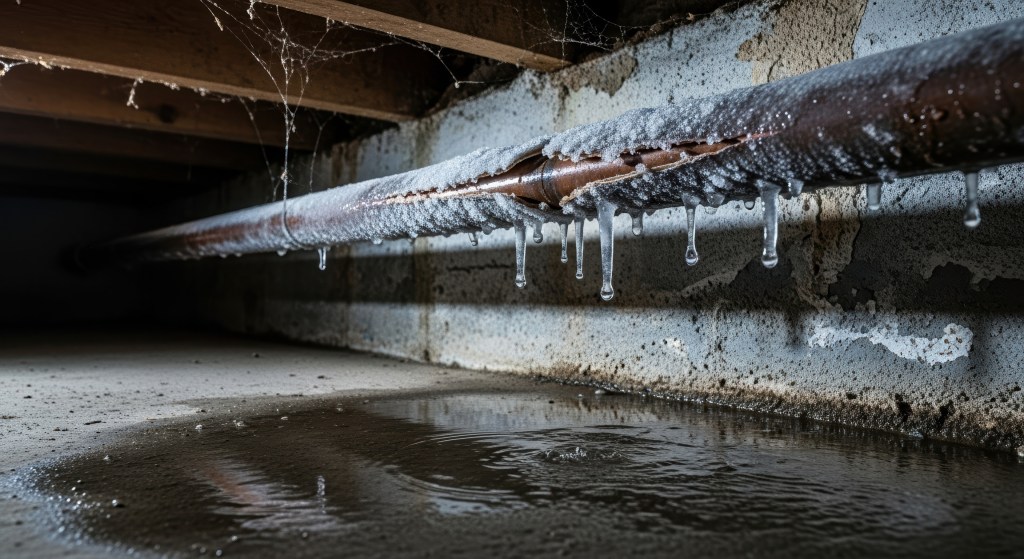
As winter settles in across the Tri-State area (New Jersey, Pennsylvania, and Delaware), homeowners begin shifting focus to heating systems, insulation, and energy efficiency. One issue that often gets overlooked until it becomes a problem is plumbing exposure to freezing temperatures. Frozen pipes are not random failures — they are usually the result of predictable building conditions that can be addressed through thoughtful maintenance.
This guide focuses on practical, maintenance-based strategies to prevent frozen pipes, particularly in unconditioned spaces such as crawl spaces, basements, garages, and exterior walls. Rather than relying on fear-based messaging, the goal here is to help homeowners understand why pipes freeze, where the risks typically exist, and how routine maintenance and inspections can significantly reduce the likelihood of winter plumbing damage.
Understanding Why Pipes Freeze in Winter
Water freezes at 32°F, but pipes often experience freezing even when outdoor temperatures are slightly above that threshold. This happens because plumbing in unconditioned or poorly insulated areas can drop below freezing faster than the rest of the home. When water freezes inside a pipe, it expands, increasing internal pressure along the pipe walls.
Contrary to common belief, most pipes don’t fail at the moment they freeze. Damage typically occurs when the ice begins to thaw and water pressure returns, forcing water through weakened sections or cracks. That’s when leaks, ruptures, or sudden bursts occur — often when homeowners least expect it.
Insurance loss data consistently shows that frozen and burst pipes remain one of the most common winter-related water damage claims in residential properties. According to legal and insurance industry analysis, these losses account for billions of dollars in claims nationwide each year (MWL Law).
Why Frozen Pipes Are a Maintenance Issue — Not Bad Luck
Frozen pipes rarely happen without warning signs. In most cases, they occur in locations with known vulnerabilities, such as:
- Uninsulated or minimally insulated pipe runs
- Plumbing located in exterior walls
- Pipes running through crawl spaces, garages, or attics
- Areas with air leaks, drafts, or missing vapor barriers
- Homes with inconsistent indoor heating
Because these conditions are visible and measurable, frozen pipes should be viewed as a maintenance and building-performance issue, not an unpredictable accident. Addressing these vulnerabilities early is the most effective way to reduce winter plumbing risk.
From an insurance standpoint, this distinction matters. Most homeowner policies cover damage caused by frozen or burst pipes only if the home was reasonably maintained and heated. Claims may be denied if insurers determine that preventative steps were not taken or the property was left unheated during cold weather (Independent Insurance Associates).
The Real Cost of Frozen and Burst Pipes
Beyond repair bills, frozen pipes can lead to secondary damage that significantly increases overall loss costs. Water intrusion can affect flooring, drywall, insulation, electrical systems, and indoor air quality. In multi-level homes, damage can cascade through multiple floors before it’s discovered.
Industry analysis of burst pipe claims shows that average losses frequently reach tens of thousands of dollars, with complex events climbing much higher depending on response time and building construction (Risk & Insurance).
From a maintenance perspective, prevention costs are minimal compared to the expense and disruption of water damage restoration. Insulation upgrades, air sealing, and heating adjustments typically cost far less than post-loss cleanup and repairs.
Key Areas Where Pipes Are Most Vulnerable
Crawl Spaces
Crawl spaces are one of the most common locations for frozen pipes in the Tri-State region. These areas are often unconditioned, vented, and subject to cold air infiltration. When vents are left open during winter, cold air flows directly across plumbing, lowering pipe temperatures rapidly.
Closing crawl space vents for the winter season helps limit cold air exposure. Homes with persistent issues may benefit from improved insulation, air sealing, or crawl space encapsulation, which can help stabilize temperatures and improve overall building performance (Crawl Pros).
Basements and Utility Rooms
Basements may feel warmer than crawl spaces, but pipes near foundation walls or rim joists are still vulnerable. Drafts and unsealed penetrations allow cold air to reach pipes, especially during extended cold spells.
Insulating pipes and sealing air leaks in these areas helps maintain more stable temperatures and reduces freeze risk.
Exterior Walls and Cabinets
Plumbing routed through exterior walls is another common risk point. These walls are colder than interior spaces, and pipes inside cabinets may be isolated from warm indoor air.
Opening cabinet doors under sinks during cold weather allows heated air to circulate around pipes, helping prevent freezing (UGI Heating & Cooling).
Practical Maintenance Steps to Prevent Frozen Pipes
Insulate Exposed Pipes
Insulating exposed pipes is one of the simplest and most effective winter maintenance tasks. Foam pipe sleeves and fiberglass wraps help slow heat loss and reduce the likelihood of freezing during cold weather.
Pipe insulation is especially important in crawl spaces, basements, garages, and utility rooms. Even modest insulation improvements can significantly reduce freeze risk when combined with air sealing.
Maintain Consistent Indoor Temperatures
Keeping your home at a consistent temperature is essential during winter months. Large nighttime setbacks or shutting off heat in unused areas can allow pipes to cool rapidly.
For homes with plumbing in unconditioned or exterior locations, maintaining steady heat is a key requirement insurers look for when evaluating frozen pipe claims (Independent Insurance Associates).
Seal Air Leaks and Penetrations
Air leaks around foundation walls, sill plates, plumbing penetrations, and utility entries allow cold air to reach pipes even when the home is heated. Sealing these openings helps reduce drafts and protect plumbing.
This step also improves energy efficiency and indoor comfort, making it a valuable year-round maintenance upgrade.
Use Heat Tape Where Appropriate
Electric heat tape or heating cables can provide targeted protection for especially vulnerable pipe runs. These systems activate when temperatures drop and help keep pipes above freezing.
Heat tape should always be installed according to manufacturer guidelines, and periodic inspections are recommended to ensure continued safe operation (The Home Depot).
Allow Faucets to Drip During Extreme Cold
During periods of extreme cold, allowing a small, steady drip from faucets connected to vulnerable pipes can help keep water moving and reduce freeze risk. While this method is not a replacement for insulation, it can provide additional protection during severe weather events or when homes are temporarily unoccupied (Homes & Gardens).
Frozen Pipes and Long-Term Home Maintenance Planning
Preventing frozen pipes isn’t just a winter task — it’s part of responsible long-term home care. During 1-year, 5-year, and 10-year maintenance inspections, inspectors often evaluate conditions that directly influence freeze risk, including:
- Pipe insulation and routing
- Crawl space and basement conditions
- Air sealing and thermal performance
- Heating system distribution and balance
Identifying vulnerabilities early allows homeowners to plan upgrades gradually rather than reacting to emergencies. Maintenance inspections also provide documentation that supports insurance claims and future resale disclosures.
Homeowners interested in proactive planning can learn more about maintenance-focused inspections through professional home inspection services such as those offered by Dynamic Inspections:
Home Inspector Burlington County, New Jersey | Home Inspection Services
Homes with crawl spaces, moisture concerns, or airflow issues may also benefit from indoor environmental quality evaluations that help identify temperature and moisture patterns contributing to freeze risk:
https://dynamicinspections.net/ieq-iaq-investigations/
How Insurance Companies Handle Frozen Pipe Claims
Most homeowner insurance policies cover water damage from frozen or burst pipes when the event is sudden and accidental and the home was reasonably maintained. Coverage may be limited or denied if insurers determine that the home was left unheated or preventative measures were ignored.
Understanding your policy requirements and documenting maintenance improvements — such as insulation upgrades or heating system servicing — can reduce disputes if a claim arises. Insurance professionals emphasize that prevention and documentation are key factors in claim outcomes (Independent Insurance Associates).
Final Thoughts: Maintenance Is the Best Protection
Frozen pipes are one of the most common winter home issues — and one of the most preventable. By insulating exposed plumbing, maintaining consistent indoor temperatures, sealing air leaks, and addressing crawl space conditions, homeowners can significantly reduce the risk of pipe bursts and water damage.
Approaching winter plumbing as a maintenance issue rather than an emergency helps protect your home, supports smoother insurance claims, and reduces long-term costs. With thoughtful planning and periodic inspections, winter weather doesn’t have to come with plumbing surprises.