
Winter weather can be beautiful—but it can also be deceptively destructive. One of the most misunderstood and damaging cold-weather issues homeowners face is ice damming. While icicles hanging from the roof may look harmless, they often signal a much deeper problem involving heat loss, moisture movement, and hidden water damage inside the home.
Ice damming is not simply a roofing issue. It is a building-science problem that involves insulation, air sealing, ventilation, and drainage working (or not working) together. Understanding how ice dams form—and why they can cause significant damage—is the first step toward protecting your home.
What Is Ice Damming?
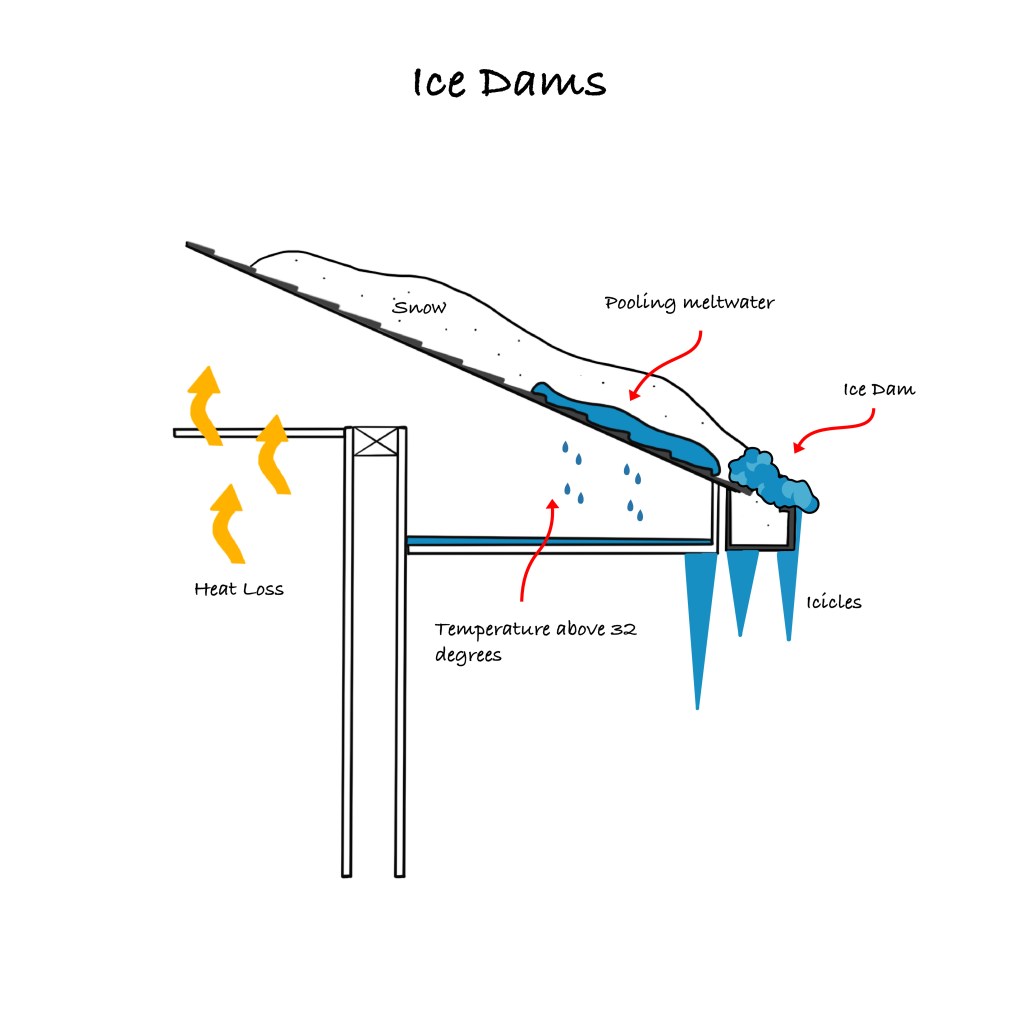
Ice damming occurs when snow on a roof melts, flows downward, and then refreezes near the colder roof edges—typically above exterior walls, soffits, and gutters. Over time, this refrozen water builds up into a ridge of ice that blocks normal drainage.
Once an ice dam forms, additional snowmelt has nowhere to go. Water backs up behind the ice and can be forced underneath shingles, flashing, and roof coverings. From there, it may leak into attic spaces, wall cavities, ceilings, and insulation—often without being immediately visible.
Why Ice Damming Is More Than a Roof Problem
Many homeowners assume ice dams are caused by snow alone. In reality, snow is just the trigger. The real cause lies inside the home.
Ice damming forms because of uneven roof temperatures, usually created by:
- Heat escaping from the living space into the attic
- Poor insulation coverage
- Air leaks around penetrations
- Inadequate attic ventilation
When warm air from inside the home escapes upward, it heats the roof deck from below. Snow above that area melts, while colder roof edges remain below freezing. This temperature imbalance is what drives ice dam formation.
The Building Science Behind Ice Dams
To understand ice damming, it helps to think about how a home is supposed to work in winter.
The Ideal Scenario
- Warm air stays inside the living space
- Insulation slows heat loss
- Air sealing prevents warm air leakage
- Attic ventilation removes excess heat and moisture
- The roof stays cold and snow remains frozen until it melts naturally
What Happens Instead
- Warm air leaks into the attic
- Roof sections warm unevenly
- Snow melts prematurely
- Water refreezes at cold eaves
- Ice dams form and trap water
This is why ice damming is often most severe on homes with:
- Older insulation systems
- Finished attics or vaulted ceilings
- Complex rooflines
- Recessed lighting or attic access hatches
- Leaky ductwork running through attics
Why Ice Damming Is Common in New Jersey and Pennsylvania
Homes in New Jersey and Pennsylvania are especially vulnerable to ice damming due to a combination of climate and construction factors.
Freeze–Thaw Cycles
The Mid-Atlantic region experiences frequent temperature swings:
- Snowfall followed by daytime melting
- Overnight refreezing
- Repeated cycles that accelerate ice buildup
Older Housing Stock
Many homes were built before modern energy codes:
- Insulation levels are often inadequate
- Air sealing was not a priority during construction
- Attic ventilation may be incomplete or blocked
Finished Attics and Vaulted Ceilings
Finished spaces under the roof reduce available insulation depth and often interrupt ventilation pathways, increasing heat loss at the roof deck.
Common Warning Signs of Ice Damming
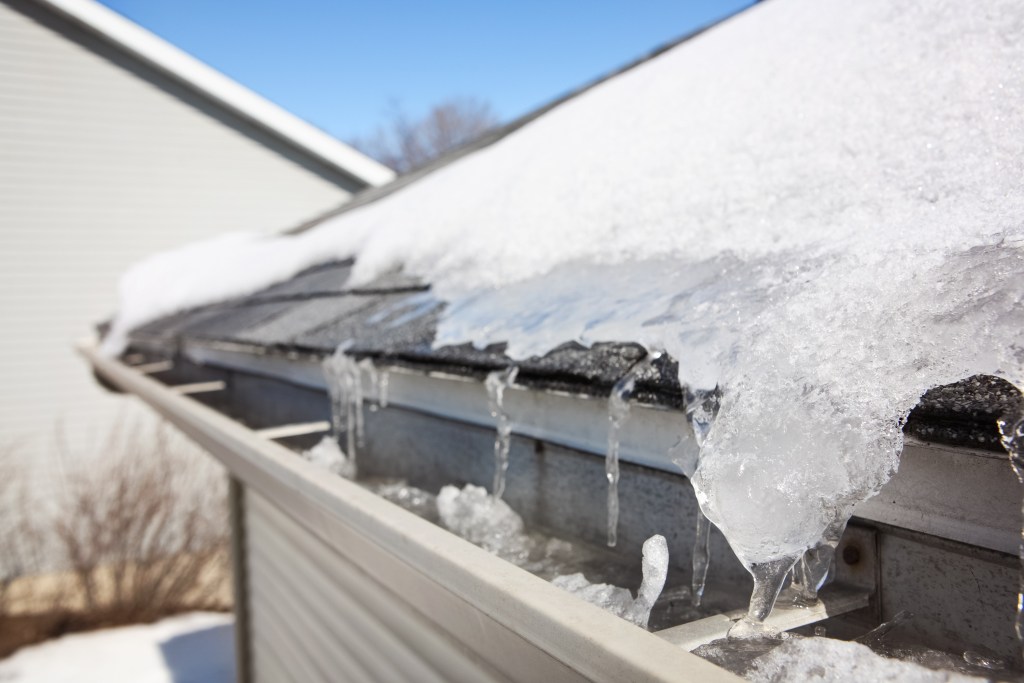
Ice dams rarely appear without warning. Homeowners often overlook early signs because they don’t realize what they’re seeing.
Exterior Warning Signs
- Large or persistent icicles
- Ice buildup inside gutters
- Snow melting unevenly on the roof
- Ice forming at roof edges while snow remains higher up
Interior Warning Signs
- Water stains on ceilings or walls
- Peeling paint near exterior walls
- Damp insulation in attic spaces
- Musty odors during winter months
- Drafty rooms or uneven temperatures
By the time water stains appear inside, moisture may already be trapped within the building envelope.
How Ice Damming Causes Hidden Damage
Ice damming is especially damaging because the water intrusion often occurs slowly and out of sight.
Roof and Structural Damage
- Saturated roof decking
- Rotting fascia boards
- Damaged sheathing
- Corrosion of fasteners
Insulation and Energy Loss
- Wet insulation loses R-value
- Increased heating costs
- Persistent cold drafts
- Reduced comfort throughout the home
Interior and Health Impacts
- Mold growth inside walls and ceilings
- Stained drywall and plaster
- Compromised indoor air quality
- Long-term moisture issues that persist beyond winter
Why Temporary Fixes Don’t Solve Ice Damming

Homeowners often try quick solutions when ice dams appear, such as:
- Roof raking
- Ice melt socks
- Heated roof cables
While these methods may reduce visible ice, they do not address the root cause. Without correcting heat loss and air leakage, ice damming will return—often worse than before.
Temporary fixes can also create a false sense of security, allowing hidden moisture damage to continue undetected.
Proper Long-Term Solutions for Ice Damming
The most effective way to prevent ice damming is to address the building-science issues that cause uneven roof temperatures.
1. Air Sealing the Attic
Sealing air leaks is often the most important step. Common leakage points include:
- Recessed lighting
- Plumbing and electrical penetrations
- Attic access hatches
- Duct chases and framing gaps
Reducing air leakage prevents warm, moist air from reaching the attic.
2. Improving Insulation
Insulation should be:
- Continuous
- Properly installed
- Adequate in depth for the climate
Gaps, compression, or missing insulation can create hot spots on the roof that promote ice dam formation.
3. Correcting Attic Ventilation
Balanced ventilation helps maintain consistent roof temperatures by:
- Removing excess heat
- Reducing moisture buildup
- Supporting insulation performance
Soffit vents, ridge vents, and baffles must work together. Blocked or poorly designed ventilation can worsen ice damming.
4. Managing Roof Drainage
Gutters and downspouts must remain clear and functional. Ice-blocked gutters can:
- Trap meltwater
- Force water back under shingles
- Increase ice buildup at the roof edge
Proper drainage helps water exit the roof before it can refreeze.
Why Ice Damming Should Be Evaluated Professionally
Ice damming often indicates underlying issues that are not visible from the ground. A professional inspection can help identify:
- Heat loss pathways
- Insulation deficiencies
- Ventilation problems
- Moisture intrusion patterns
- Early signs of damage before repairs become extensive
At Dynamic Inspections LLC, ice dam risk is evaluated by looking at the entire building system—not just the roof surface.
👉 Learn more about our inspection services here:
https://dynamicinspections.net/home-inspection-services
How a Home Inspection Helps Prevent Ice Dam Damage
A comprehensive inspection may include:
- Attic access and visual assessment
- Insulation depth and coverage review
- Identification of air leakage points
- Moisture staining or condensation indicators
- Exterior drainage and roof edge evaluation
The goal is not just to document damage, but to explain why it is happening and what steps can reduce future risk.
Ice Damming and Long-Term Home Protection

Ignoring ice damming can lead to:
- Repeated winter leaks
- Ongoing mold issues
- Escalating repair costs
- Reduced property value
Addressing the root causes improves:
- Energy efficiency
- Indoor comfort
- Durability of the home
- Peace of mind during winter storms
Final Thoughts: Ice Damming Is Preventable
Ice damming is one of the clearest examples of how small building-performance issues can lead to major damage. The good news is that when insulation, air sealing, ventilation, and drainage work together properly, ice dams can often be prevented entirely.
If your home experiences recurring icicles, winter leaks, or uneven roof snowmelt, it may be time for a closer look before the next freeze.
👉 Explore more homeowner education resources in our Learning Center:
https://dynamicinspections.net/learning-center