One of the most common assumptions homeowners make is that sewer problems only affect old houses. If a home was built in the 1950s or earlier, a sewer scope inspection makes sense. But if the home was built around the year 2000 or later, many buyers and homeowners believe there’s no reason to look inside the sewer line.
That assumption comes up constantly during inspections in Burlington County and across New Jersey. Buyers will often say, “The house was built in 2004” or “It’s only about 20 years old—why would the sewer be an issue?”
This is exactly why the question is a sewer scope necessary in newer homes is so important to address correctly. Homes built in the last 20–25 years can—and frequently do—have sewer defects that are invisible without a camera inspection.
This article explains why newer homes still benefit from sewer scope inspections, what inspectors actually find in the field, and why Burlington County homeowners should not rely on age alone when assessing sewer risk.
What “Newer Home” Really Means in Sewer Terms
When buyers hear “newer,” they typically think:
- PVC sewer pipe
- Modern construction standards
- Fewer long-term wear issues
While those assumptions are partially true, they miss a critical point: sewer failures in newer homes are usually caused by installation and site conditions, not age-related deterioration.
Unlike older homes, where sewer issues often stem from material degradation (such as clay or cast iron), newer homes experience problems related to:
- Construction practices
- Soil conditions
- Heavy equipment damage
- Improper trenching or backfill
- Municipal connection issues
In other words, the pipe may be new, but the defect was there from day one.
Homeowner Responsibility: From the House to the Curb
One of the most important facts homeowners need to understand is responsibility.
In New Jersey, including Burlington County, the homeowner is responsible for the sewer lateral from the house all the way to the curb or municipal connection. Municipalities generally maintain only the main line under the street.
This applies regardless of whether the home was built in:
- 1960
- 1995
- 2008
- Or last year
If the sewer line fails, the repair cost falls on the homeowner.
The U.S. Environmental Protection Agency clearly explains private sewer lateral responsibility here:
https://www.epa.gov/sewers/private-sewer-laterals
This is one of the main reasons sewer scope inspections matter for newer homes—because ownership responsibility begins immediately.
Sewer Lines Are Not Covered Under Builder or Home Warranties
Another misconception is that sewer lines are protected under builder warranties or home warranties.
In reality:
- Sewer laterals are almost always excluded from builder warranties
- Underground utilities are commonly disclaimed
- Home warranties rarely cover buried sewer lines, or only cover very limited repairs
Even in cases where coverage is briefly offered, proving that a defect existed prior to occupancy is extremely difficult without documented inspection evidence.
Once a buyer closes, sewer repairs almost always become a 100% out-of-pocket expense.
Why Sewer Problems Are Common in Homes Built After 2000
Many sewer issues in newer homes have nothing to do with material quality and everything to do with how the line was installed and what happened afterward.
1. Crushed or Deformed PVC Pipe
PVC sewer pipe is widely used in newer construction, but it is not immune to damage.
During construction, sewer lines are often exposed to:
- Heavy machinery
- Improper compaction
- Temporary loads from vehicles or equipment
We frequently find:
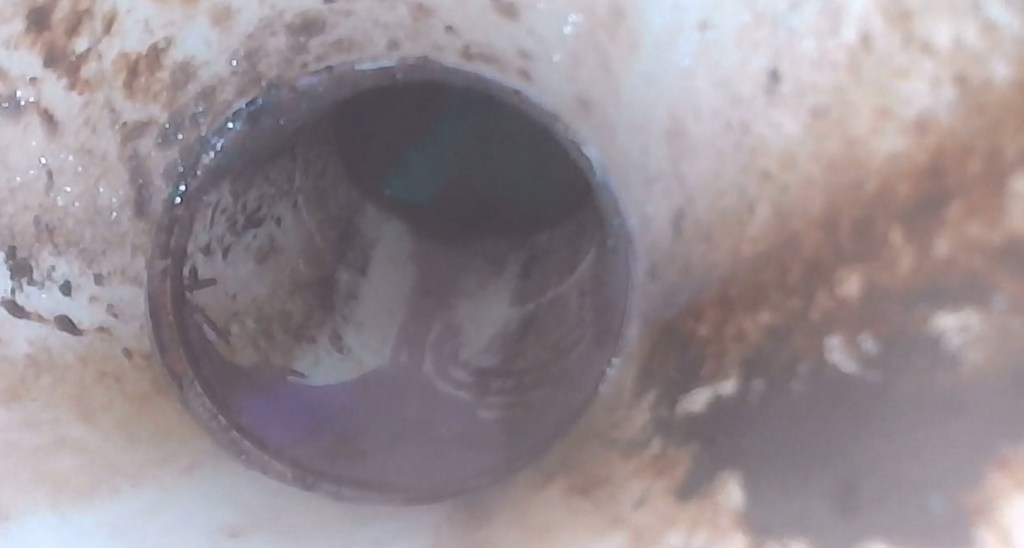
- Oval-shaped pipe deformation
- Crushed sections
- Partial collapses hidden beneath soil or concrete
These defects often go unnoticed because the line may still drain—until waste begins to accumulate.
2. Improper Bedding and Trench Preparation
Proper sewer installation requires:
- Uniform bedding material
- Correct slope
- Proper compaction
In fast-paced developments, trench preparation may be rushed or uneven. This can result in:
- Bellies (low spots where water collects)
- Standing water in the line
- Accelerated buildup of waste and debris
Bellies are especially problematic because they cannot be corrected without excavation.
3. Construction Debris Inside the Sewer Line
One of the most common findings in newer homes is debris left behind during construction.
Examples include:
- Concrete slurry
- Mortar
- Broken caps
- Plastic wrap
- Wood fragments
These materials may partially block the line or reduce flow capacity, creating future backup risks that are invisible from above.
Burlington County–Specific Factors That Increase Risk
Burlington County presents unique conditions that make sewer scope inspections particularly valuable for newer homes.
Mixed-Age Municipal Infrastructure
Many newer homes connect to:
- Older municipal sewer mains
- Legacy systems with varying pipe materials
- Previously installed stubs or laterals
Transitions between old and new materials are common failure points.
Soil and Settlement Conditions
Local soil composition can contribute to:
- Differential settlement
- Pipe movement
- Joint separation
Even a properly installed sewer line can develop issues if surrounding soil shifts over time.
Development Patterns
High-density developments often involve:
- Multiple subcontractors
- Tight construction timelines
- Limited internal verification of underground work
Municipal inspections typically confirm code compliance—not internal pipe condition.
Why Sewer Defects Don’t Show Up Right Away
One of the most dangerous assumptions homeowners make is believing that a sewer problem would be obvious.
In reality:
- Many sewer defects cause no immediate symptoms
- Lines may drain during inspection but fail later
- Problems often surface months or years after occupancy
This delayed failure is why is a sewer scope necessary in newer homes remains a valid and important question.
The Real Cost of Sewer Repairs in New Jersey
Sewer repairs are among the most expensive home repairs homeowners face.
Typical costs in New Jersey include:
- $3,000–$7,000 for localized repairs
- $8,000–$15,000+ for full lateral replacement
- Additional costs for landscaping, concrete, or driveway removal
Compared to these figures, a sewer scope inspection is a relatively small investment with significant upside.
When Sewer Scope Inspections Are Especially Important for Newer Homes
A sewer scope inspection is strongly recommended if:
- The home was built after 2000
- The development ties into an existing municipal sewer
- Driveways or patios are installed over the sewer line
- The basement will be finished or renovated
- The property is in Burlington County or surrounding NJ municipalities
In these situations, sewer scope inspections provide documentation and clarity before problems become costly.
What a Professional Sewer Scope Inspection Includes
A proper sewer scope inspection should include:
- Full camera inspection to the curb or municipal connection
- Evaluation of pipe material transitions
- Identification of defects or obstructions
- Video and still-image documentation
- Clear written findings and recommendations
At Dynamic Inspections, sewer scope inspections are commonly performed alongside a full home inspection, allowing buyers to understand both above-ground and underground conditions in one process.
https://dynamicinspections.net/home-inspections/
You can also learn more about our sewer scope inspection services here:
https://dynamicinspections.net/sewer-scope-inspections/
Common Myths About Sewer Scopes in Newer Homes
“It’s PVC, so it’s fine.”
PVC can still be crushed, misaligned, or improperly sloped.
“The town inspected it.”
Municipal inspections do not camera sewer laterals.
“There’s no backup, so it’s fine.”
Many defects don’t cause symptoms until years later.
“I’ll deal with it if something happens.”
Once landscaping and hardscaping are complete, repair costs increase dramatically.
Is a Sewer Scope Necessary in Newer Homes? The Bottom Line
Newer construction does not eliminate sewer risk—it changes the nature of it.
Because:
- Sewer laterals are homeowner responsibility from house to curb
- Sewer lines are not covered under warranties
- PVC sewer damage is common in newer homes
- Repairs are expensive and disruptive
Asking is a sewer scope necessary in newer homes is really about verifying one of the most critical underground systems before it becomes your financial responsibility.
For many Burlington County and New Jersey homeowners, the answer is yes.
Final Thoughts
Sewer scope inspections aren’t about expecting problems—they’re about confirming that everything was installed correctly and remains functional.
If your home was built around 2000 or later and you’ve never had the sewer line inspected, a sewer scope can provide valuable insight and peace of mind before small defects turn into major repairs.