
A professional hot water heater inspection in New Jersey involves much more than checking the age of the tank or confirming that hot water is available. One of the most overlooked — yet most critical — aspects of gas water heater safety is proper venting and adequate combustion make-up air.
Improper venting or insufficient air supply can lead to poor appliance performance, premature failure, carbon monoxide risks, and serious safety hazards. Unfortunately, these issues are common in New Jersey homes, especially older houses with basements, utility rooms, or mechanical closets that have been modified over time.
At Dynamic Inspections LLC, we regularly document venting and combustion air concerns during home inspections throughout New Jersey and Eastern Pennsylvania. This article explains how these systems work, what inspectors look for, why cubic feet per BTU matters, and how the vents shown in the photos play a vital role in gas appliance safety.
Why Venting and Combustion Air Matter in a Hot Water Heater Inspection
Gas-fired water heaters burn fuel to heat water. For combustion to occur safely and efficiently, the appliance needs:
-
Oxygen (combustion air)
-
A reliable path to exhaust combustion byproducts (venting)
If either of these elements is compromised, the appliance may still appear to operate — but unsafe conditions can exist behind the scenes.
During a hot water heater inspection in New Jersey, inspectors evaluate not just the water heater itself, but the entire environment in which it operates, including the utility room, basement, or mechanical space.
Understanding Combustion Air (Make-Up Air)
Combustion air, often referred to as make-up air, is the fresh air required for gas appliances to burn fuel properly. In many New Jersey homes, this air is supplied passively through permanent openings rather than mechanical systems.
These openings are commonly installed as:
-
A high opening near the ceiling
-
A low opening near the floor
Together, they allow fresh air to enter while supporting proper draft for vented appliances.

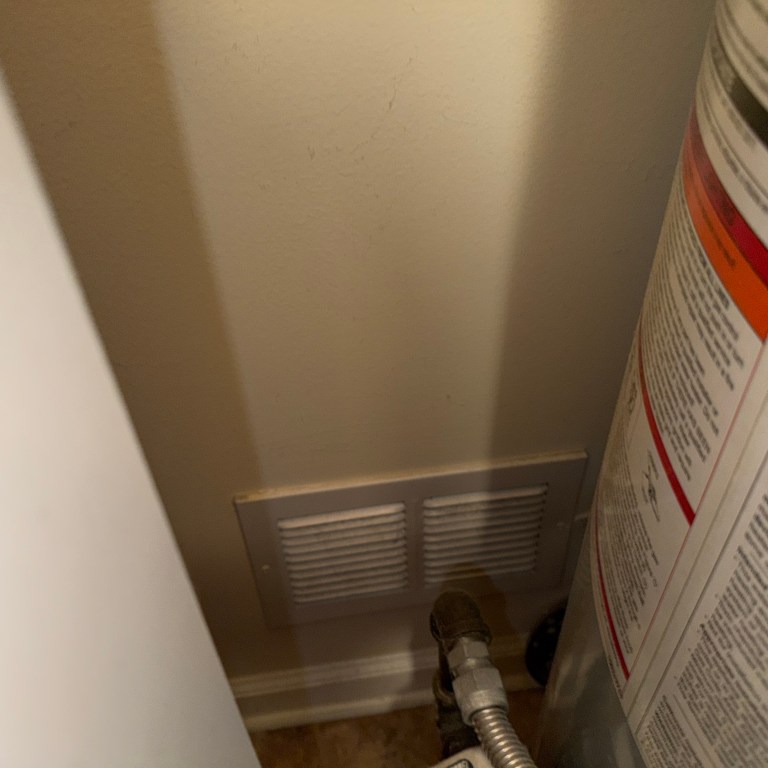
Combustion Air Requirements: Cubic Feet Per BTU Explained
One of the most commonly searched questions homeowners ask is:
“How much combustion air does a gas water heater need?”
A widely referenced rule of thumb used in fuel gas codes and manufacturer guidance is:
At least 50 cubic feet of indoor air for every 1,000 BTUs of total appliance input when combustion air is taken from inside the building.
What This Means in Real Terms
-
A 40,000 BTU gas water heater requires about 2,000 cubic feet of air
-
A utility room measuring 10′ × 10′ × 8′ contains only 800 cubic feet
In that scenario, the space alone does not provide sufficient combustion air. Additional openings or dedicated make-up air would likely be required.
When combustion air is drawn from outside the building, different sizing rules apply, and properly sized ducts or openings are required.
During a hot water heater inspection in New Jersey, inspectors do not calculate or design systems, but they do consider whether the size of the space reasonably supports the BTU demand of the installed appliances.
Inspecting the Utility Room: All Gas Appliances Are Considered
When evaluating combustion air, inspectors do not look at appliances individually. Instead, they evaluate the combined demand of all gas-fired appliances located in the same space.
This includes:
-
Gas hot water heaters
-
Gas furnaces
-
Gas boilers
-
Gas clothes dryers
Each appliance consumes combustion air. When multiple appliances operate in the same utility room, the total BTU input increases — and so does the need for adequate make-up air.
For example:
-
40,000 BTU water heater
-
80,000 BTU furnace
-
Gas dryer operating intermittently
That combined demand may exceed what the room can safely supply.
Inspectors assess the whole system, not just one appliance, and recommend further evaluation when conditions suggest insufficient air.
Venting Systems: Safely Removing Exhaust Gases
In addition to combustion air, gas water heaters must safely remove combustion byproducts. Most conventional units use natural-draft metal venting, which relies on heat and buoyancy to carry exhaust gases upward and out of the home.
Common Venting Issues Found During Inspections
-
Loose or disconnected vent connectors
-
Improper slope or routing
-
Corrosion or rust
-
Inadequate clearance to combustibles
-
Evidence of backdrafting
Even when a water heater produces hot water, venting deficiencies can still pose serious safety risks.

Draft, Back drafting, and Carbon Monoxide Risk
Natural-draft appliances rely on proper airflow to move exhaust gases out of the home. If combustion air is restricted or competing exhaust systems are present, draft can weaken or reverse — a condition known as backdrafting.
Backdrafting can allow exhaust gases, including carbon monoxide (CO), to spill into living spaces.
Carbon monoxide is colorless and odorless. Symptoms of exposure may include headaches, dizziness, nausea, and fatigue.
For more information on carbon monoxide risks, homeowners can review guidance from the
U.S. Environmental Protection Agency (EPA):
https://www.epa.gov/indoor-air-quality-iaq/carbon-monoxides-impact-indoor-air-quality
and the
U.S. Consumer Product Safety Commission (CPSC):
https://www.cpsc.gov/Safety-Education/Safety-Guides/Carbon-Monoxide
How Renovations Can Create Hidden Combustion Air Problems
Many New Jersey homes have been updated over decades. Common upgrades such as:
-
Basement finishing
-
Added insulation
-
Air sealing
-
New windows and doors
can unintentionally reduce available combustion air.
A water heater that was once safely installed can become unsafe due to changes made elsewhere in the home. This is why professional inspections focus on current conditions, not just original installation.
What Inspectors Document During a Hot Water Heater Inspection
At Dynamic Inspections LLC, our inspections are observation-based and safety-focused. During a hot water heater inspection in New Jersey, we typically document:
-
Appliance type and location
-
Vent connector condition
-
Combustion air openings
-
Evidence of corrosion or heat damage
-
Conditions that may warrant further evaluation
Our goal is to provide clear, understandable information — not technical jargon.
Why These Issues Are So Common in New Jersey Homes
New Jersey’s housing stock includes:
-
Older homes with small basements
-
Converted utility spaces
-
Multiple gas appliances sharing limited air
-
Seasonal climate impacts
These factors make combustion air and venting issues especially common during inspections.
Why Choose Dynamic Inspections LLC
Dynamic Inspections LLC provides comprehensive home and environmental inspections throughout New Jersey and Eastern Pennsylvania. Our inspections are designed to inspect, inform, and educate — not rush or gloss over safety concerns.
When you schedule a hot water heater inspection in New Jersey with us, you receive:
-
Clear photo documentation
-
Straightforward explanations
-
Local knowledge
-
Honest recommendations
Learn more or schedule an inspection at
👉 https://www.dynamicinspections.net
For additional services including HVAC inspections, mold testing, and indoor air quality evaluations, visit
👉 https://www.dynamicinspections.net
Final Takeaway
Combustion air openings and venting systems are not optional features — they are essential safety components of gas-fired water heaters. The ceiling and floor vents shown in this article exist for a reason, and their condition matters.
A thorough hot water heater inspection in New Jersey should always include evaluation of venting, combustion air, and the combined demand of all gas appliances in the utility space.
Professional inspection isn’t just about compliance — it’s about protecting people, property, and peace of mind.