
Basement water intrusion is one of the most common concerns homeowners face, especially in regions like New Jersey and Eastern Pennsylvania where seasonal rainfall, groundwater conditions, and older housing stock can contribute to moisture issues. During home inspections, one of the systems we pay close attention to is the sump pump because it often serves as the primary defense against basement flooding.
A properly functioning sump pump can make the difference between a dry basement and significant water damage. When groundwater builds up around the foundation, a sump pump collects and removes that water before it has the opportunity to enter the home.
Despite how important these systems are, many homeowners are unfamiliar with how sump pumps work or how they should be maintained. Because they typically sit quietly in a basement corner, they’re easy to overlook until something goes wrong.
Understanding how sump pumps function, what common problems can occur, and how to maintain them can help homeowners protect their property and avoid costly repairs.
In this guide, we’ll explain how sump pumps work, why homes need them, common issues found during home inspections, and practical maintenance tips to keep them operating properly.
What Is a Sump Pump and How Does It Work?
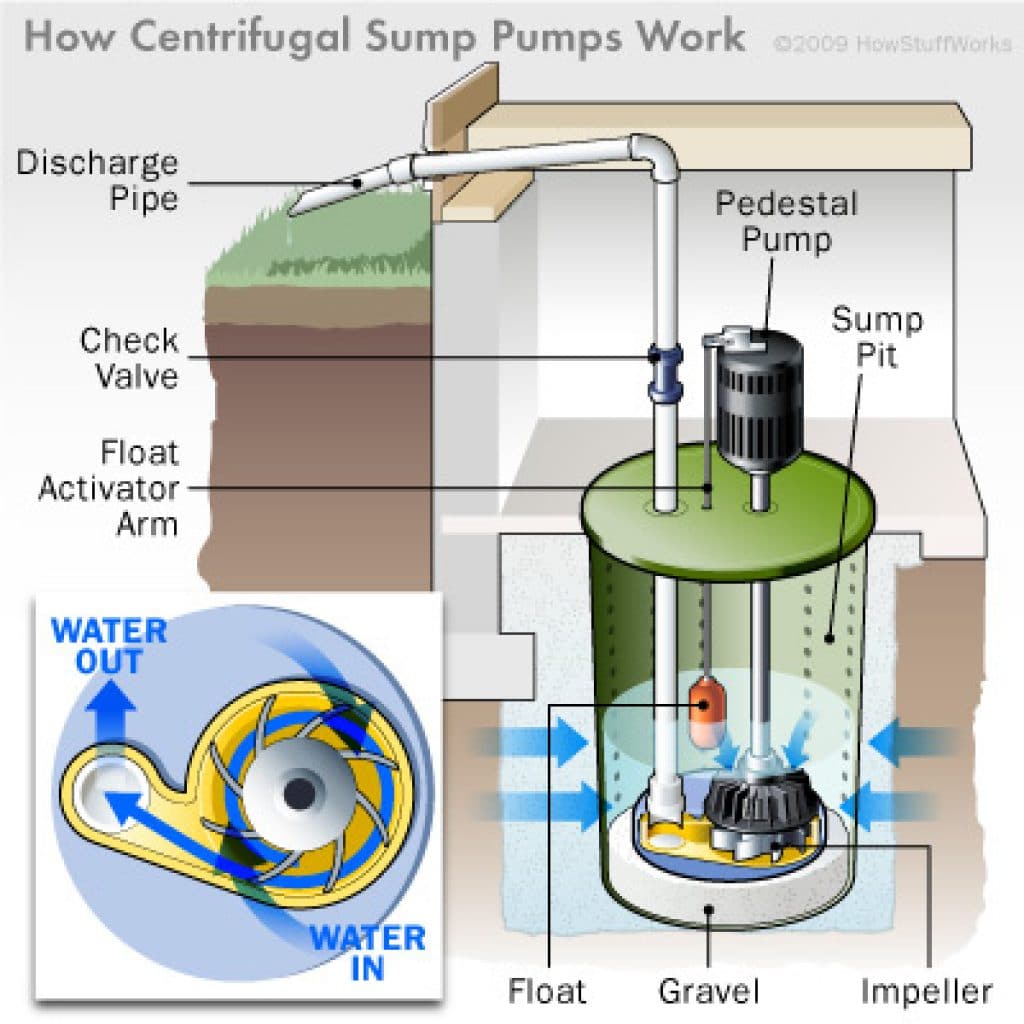
A sump pump is a mechanical device installed in a sump basin or sump pit, which is typically located at the lowest point of a basement floor. The sump pit collects groundwater that accumulates around the foundation.
Water can enter the sump pit through perimeter drainage systems such as foundation drains, interior French drains, or natural groundwater seepage beneath the slab.
When the water level inside the sump pit rises to a predetermined height, a float switch activates the pump. Once activated, the pump pushes water through a discharge pipe and directs it away from the home’s foundation.
The process works like this:
- Groundwater enters the sump pit through drainage systems around the foundation.
- The water level inside the pit rises.
- A float switch detects the rising water level and activates the pump.
- The pump moves water through the discharge pipe.
- The water is expelled away from the structure.
By removing groundwater before it reaches the basement floor level, the sump pump reduces hydrostatic pressure around the foundation and helps prevent water intrusion.
Without this system, groundwater pressure could force water through cracks, seams, or porous areas of the foundation walls or floor slab.
Why Homes Need Sump Pumps
Many homes are built in areas where groundwater levels fluctuate seasonally. During periods of heavy rain or snowmelt, water can accumulate around the foundation of the home.
When the soil surrounding a foundation becomes saturated, it creates pressure against the basement walls and floor. This pressure, known as hydrostatic pressure, can push water through tiny openings in the foundation.
Sump pumps help relieve this pressure by removing groundwater before it builds up enough force to enter the basement.
According to the U.S. Environmental Protection Agency, controlling moisture is one of the most important factors in preventing indoor environmental problems such as mold growth and structural deterioration. More information about moisture management can be found on the EPA website:
https://www.epa.gov/mold
For many homes, the sump pump is a critical component of the overall drainage system designed to keep the basement dry.
Common Basement Water Problems
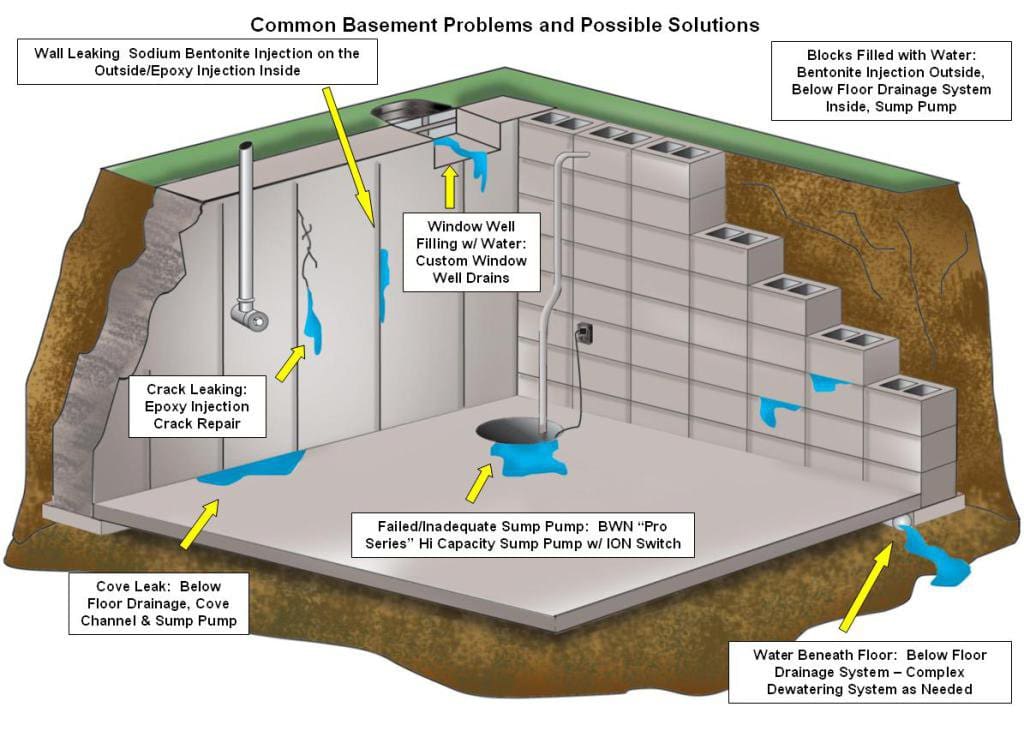
Basement water intrusion can occur for many different reasons. During inspections, we frequently observe several common conditions that contribute to basement moisture problems.
One of the most significant contributors is improper roof drainage.
Downspouts Draining Near the Foundation
When gutters and downspouts discharge water directly next to the foundation, large volumes of roof runoff are concentrated in a small area. During heavy rainfall, this water saturates the soil surrounding the foundation.
As the soil becomes saturated, hydrostatic pressure increases around the basement walls. This pressure forces groundwater toward the foundation and can lead to water intrusion through cracks, joints, or porous concrete.
Downspouts that discharge close to the house can also overwhelm the foundation drainage system, forcing sump pumps to operate more frequently.
Ideally, downspouts should discharge several feet away from the foundation so water can disperse across the yard rather than pooling near the structure.
Poor Exterior Grading
Another common issue is negative grading around the home. If the ground slopes toward the foundation instead of away from it, rainwater will naturally flow toward the basement walls.
Over time, this repeated water exposure can saturate the surrounding soil and increase hydrostatic pressure.
Foundation Cracks
Even small cracks in foundation walls or floors can allow water to enter the basement when pressure builds outside the structure.
Window Wells
Improperly drained window wells can collect water and eventually allow it to seep through basement windows.
Failed or Poorly Maintained Sump Pumps
If a sump pump fails during heavy rainfall, groundwater may quickly accumulate in the sump pit and overflow onto the basement floor.
These conditions illustrate why sump pumps play such a critical role in basement water management.
Types of Sump Pumps
There are several different types of sump pumps used in residential construction.
Understanding the differences can help homeowners determine which system best fits their needs.
Submersible Sump Pumps
Submersible pumps are installed inside the sump pit and operate underwater. These pumps are typically quieter and are capable of moving larger volumes of water.
Because they are sealed and submerged, they tend to have a more compact design and are often preferred in finished basements.
Pedestal Sump Pumps
Pedestal pumps have a motor mounted above the sump pit with a shaft that extends down into the water.
While pedestal pumps can be louder, they are easier to service because the motor remains above the pit.
Backup Sump Pump Systems
Even the best sump pump can fail, which is why many homeowners install backup systems.
Two common types of backup systems include battery backup pumps and hydro-powered backup pumps.
Battery Backup Sump Pumps
Battery backup systems activate when the primary pump fails or when electrical power is lost.
These systems typically rely on a rechargeable battery that can operate the pump for several hours during a power outage.
However, the effectiveness of a battery backup depends on the condition of the battery and the volume of water entering the sump pit.
Hydro-Powered Backup Pumps
Another option is a hydro-powered backup pump. These systems connect to the home’s municipal water supply and use water pressure to create suction that removes groundwater from the sump pit.
Because they do not rely on electricity or batteries, hydro-powered systems can continue operating during extended power outages.
One advantage of hydro-powered systems is that they require very little maintenance compared to battery systems. As long as municipal water pressure is available, the backup pump can continue operating.
However, these systems are only suitable for homes connected to municipal water supplies and are not typically used with private wells.
Signs Your Sump Pump May Be Failing
Because sump pumps often operate out of sight, homeowners may not notice problems until water appears in the basement.
Several warning signs may indicate that a sump pump is not functioning properly.
Continuous Operation
A sump pump that runs constantly may indicate a stuck float switch, a pump that is undersized for the amount of groundwater entering the pit, or excessive groundwater conditions.
Strange Noises
Grinding or rattling noises may indicate debris inside the pump or worn mechanical components.
Failure to Start
If the sump pit fills with water but the pump does not activate, the float switch or motor may have failed.
Rust and Corrosion
Rust or mineral buildup on the pump may indicate aging components or prolonged exposure to moisture.
How to Test Your Sump Pump
Testing a sump pump is a simple task that homeowners can perform periodically.
One of the easiest methods is to pour a bucket of water into the sump pit. As the water level rises, the float switch should activate the pump.
Once the pump activates, it should remove the water quickly and discharge it away from the home.
If the pump fails to activate or does not remove the water efficiently, it may require service or replacement.
Sump Pump Maintenance Tips
Routine maintenance can extend the life of a sump pump and help ensure it operates properly when needed.
Some basic maintenance tasks include:
• Cleaning debris from the sump pit
• Testing the float switch periodically
• Inspecting the discharge pipe for obstructions
• Ensuring a check valve is installed
• Confirming the pump is connected to a proper electrical outlet
One often overlooked issue involves debris accumulation inside the sump pit.
Over time, gravel, sediment, mud, and other debris can enter the sump basin through the drainage system. This debris can collect around the pump and eventually clog the impeller located at the bottom of the pump.
When debris blocks the impeller, the pump may struggle to move water effectively. In some cases, the pump motor may continue running while the impeller is obstructed, which can cause the motor to overheat and eventually burn out.
Periodic cleaning of the sump basin can help prevent these problems and extend the lifespan of the pump.
Most sump pumps have an expected service life of approximately seven to ten years depending on usage and maintenance.
Common Issues Found During Home Inspections
During home inspections, we frequently encounter sump pump systems that have deficiencies or installation problems.
Some of the most common issues include:
• Discharge pipes draining too close to the foundation
• Missing check valves
• Pumps plugged into extension cords
• Improper electrical connections
• Missing sump pit covers
• Debris-filled sump pits
These conditions can significantly reduce the effectiveness of the sump pump system and increase the risk of basement flooding.
If you are purchasing a home, a professional inspection can help identify potential drainage concerns before closing. You can learn more about our inspection services here:
https://dynamicinspections.net/home-inspections/
Preventing Basement Flooding
While sump pumps are essential for many homes, they are only one part of the overall water management system.
Homeowners should also ensure that:
• Gutters remain clear and functional
• Downspouts discharge water away from the home
• Exterior grading slopes away from the foundation
• Foundation cracks are repaired when necessary
The American Society of Home Inspectors notes that proper drainage around the home is critical for preventing moisture intrusion and protecting the structure. Additional homeowner resources can be found here:
https://www.homeinspector.org
Frequently Asked Questions About Sump Pumps
How often should a sump pump be replaced?
Most sump pumps have an average lifespan of approximately seven to ten years depending on how frequently they operate and how well they are maintained. Homes with high groundwater levels may see pumps wear out sooner because the pump cycles more frequently. If a sump pump is approaching the end of its expected lifespan, many homeowners choose to replace it proactively rather than waiting for it to fail during a heavy rainstorm.
How do I know if my sump pump is working properly?
One of the simplest ways to test a sump pump is to pour a bucket of water into the sump basin. As the water level rises, the float switch should activate the pump. The pump should then discharge the water quickly through the discharge pipe and away from the foundation. If the pump does not activate or fails to remove the water efficiently, it may require service or replacement.
What happens if a sump pump fails?
If a sump pump fails during heavy rainfall or high groundwater conditions, water may continue to accumulate in the sump pit until it overflows. Once this occurs, water can spread across the basement floor and potentially damage finished areas, flooring materials, stored belongings, and mechanical systems. This is one reason many homeowners install backup sump pump systems to provide protection if the primary pump fails.
Do I need a battery backup sump pump?
Backup sump pump systems provide an additional level of protection for homes with basements. Battery backup pumps activate when the primary pump fails or when electrical power is lost during a storm. Since power outages often occur during severe weather events, backup systems can help prevent flooding during these critical times.
Some homes also install hydro-powered backup pumps that operate using municipal water pressure. These systems can continue operating without electricity and may provide extended protection during prolonged power outages.
Why does my sump pump run so often?
A sump pump that runs frequently may be responding to high groundwater conditions, heavy rainfall, or poor drainage around the foundation. In some cases, downspouts that discharge water near the foundation or improper grading around the home can contribute to increased groundwater pressure around the basement. Redirecting roof drainage away from the house and improving exterior grading can help reduce the amount of water entering the sump pit.
Is it normal for a sump pit to contain gravel or sediment?
Small amounts of sediment can accumulate in sump pits over time, especially if the home has an interior drainage system connected to the pit. However, excessive debris such as gravel, mud, or construction debris can clog the sump pump’s intake or block the impeller. When this happens, the pump may struggle to move water and the motor can overheat. Periodic cleaning of the sump pit can help prevent these issues and improve pump performance.
Final Thoughts
Sump pumps play a vital role in protecting homes from basement water intrusion. When properly installed and maintained, they help prevent flooding, reduce moisture problems, and protect the structure of the home.
Understanding how sump pumps operate, recognizing warning signs of failure, and performing routine maintenance can help homeowners avoid costly water damage.
If you are purchasing a home or want to better understand the condition of your property’s drainage systems, a professional home inspection can provide valuable insight into sump pump operation and basement moisture conditions.
You can also learn more about our environmental and inspection services here:
https://dynamicinspections.net/environmental-testing/