Lead-Safe Compliance • Risk Reduction • Client-First Guidance
Lead Safe Inspection & Risk Assessment in New Jersey
If you’re a property owner or landlord preparing for compliance, our Lead Safe Inspection & Risk Assessment in New Jersey is designed to help you understand what inspectors look for, avoid common failure points, and protect occupants—especially children—from lead exposure.
At Dynamic Inspections LLC, we take a defect-oriented and education-first approach: we explain what we find, why it matters, and what realistic corrective steps look like—without the runaround.
Serving NJ: Mercer, Burlington, Camden, Monmouth • PA: Bucks, Philadelphia
Purpose
Identify potential lead-based paint hazards and lead dust issues that can cause a Lead Safe inspection to fail.
Approach
We combine regulatory compliance with real-world building science to help you understand risk and next steps.
Why We Go Further
When appropriate, we perform lead dust wipe sampling even if it’s not strictly required—because it protects you and protects occupants.
What is a Lead Safe Inspection in New Jersey?
A Lead Safe Inspection in New Jersey is a compliance-focused evaluation intended to identify conditions that can create lead-based paint hazards—especially in homes and rental properties where paint is deteriorated or where lead dust can be generated through normal use (like windows and doors that rub).
While the exact pathway to compliance can vary based on property type and circumstances, our goal is consistent: help you understand what inspectors look for, reduce avoidable failures, and keep occupants safe.
If you’re preparing for a Lead Safe Inspection & Risk Assessment in New Jersey, the best results come from being proactive—fixing common defect areas and understanding where lead dust typically accumulates.
What We Look For (So You Don’t Fail)
Most “failures” are not mystery problems—they’re usually predictable defects in high-wear areas. During your inspection, we focus heavily on surfaces that are known to generate lead dust and paint chips.
- Deteriorated paint (peeling, chipping, flaking, cracking) on interior and exterior surfaces
- Friction surfaces (windows/doors that rub) where dust is created through movement
- Impact surfaces (door frames, stair components, trim corners) that get hit or damaged over time
- Window components—sashes, sills, troughs, and surrounding trim (very common failure areas)
- Doors & thresholds where dust can be tracked and deposited (entryways are a big deal)
- Repairs/renovations that disturbed paint without proper containment or cleanup
If you’re unsure what should be addressed before the inspection, we can walk through the highest-risk areas first and help you prioritize the work that matters most.

Lead Dust Wipe Sampling & Clearance
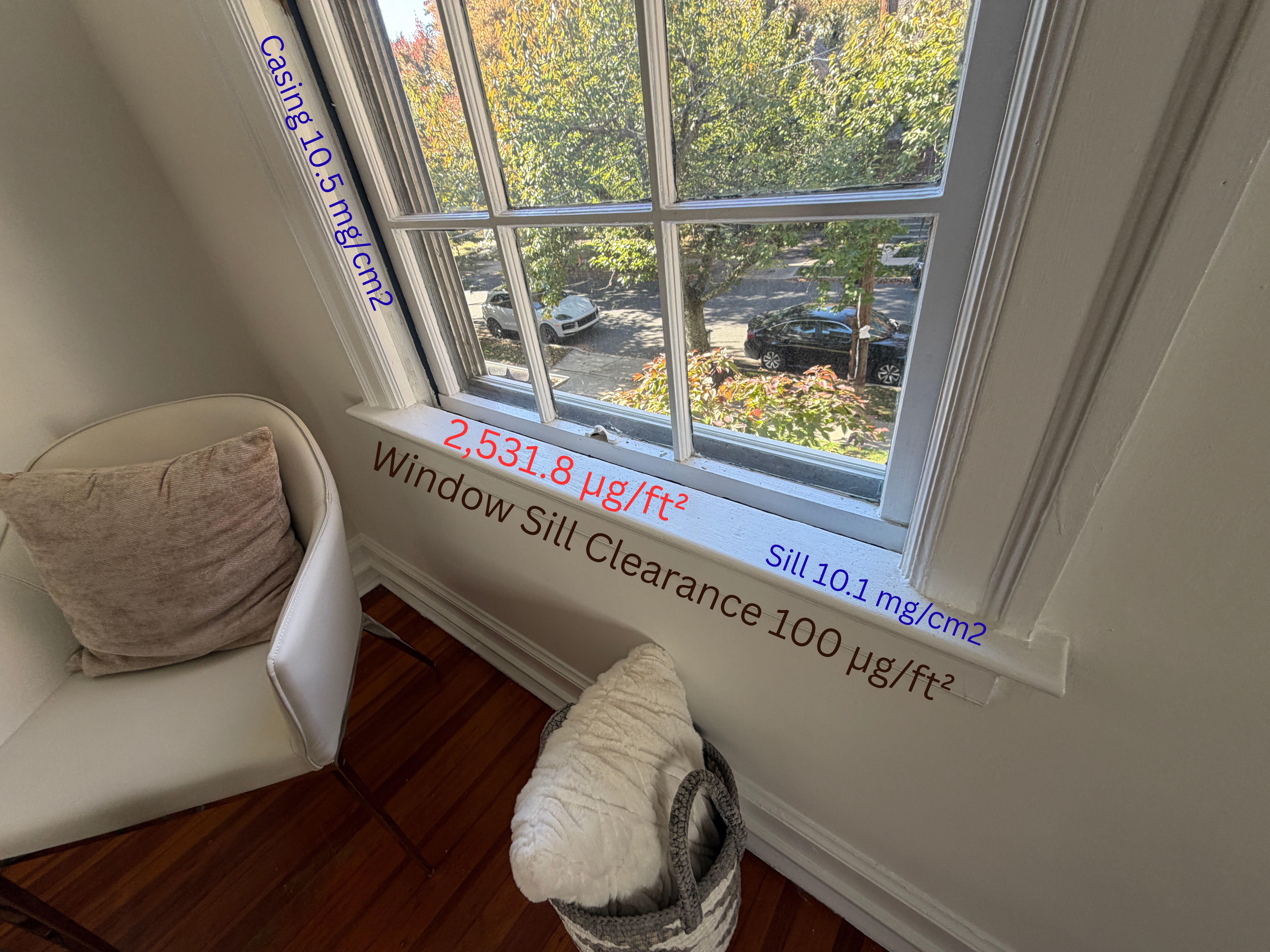
We often recommend (and in many situations perform) lead dust wipe sampling because it provides objective data. This is where we separate state of the industry from state of the art. Minimum requirements may get a box checked—but data-driven verification helps protect your property, your tenants, and you.
In New Jersey, commonly referenced lead dust hazard levels include:
- Floors: 10 µg/ft²
- Interior window sills: 100 µg/ft²
Dust wipes help confirm whether cleaning and repairs were effective—especially after paint stabilization, renovation activity, or suspected tracking from entries. If you want the safest possible outcome, this is the step that adds real value.
How to Prepare (Practical Steps to Avoid a Failure)
Here are common, practical steps that help owners pass their Lead Safe Inspection & Risk Assessment in New Jersey without surprises. (If you’re not sure what applies to your property, we’ll help you prioritize.)
- Address any peeling/chipping paint—especially at windows, doors, trim, porches, and stair components.
- Check windows that stick or rub; friction can generate dust even if paint looks “mostly fine.”
- Inspect entryways and thresholds for worn finishes and dust accumulation.
- Use proper containment and cleanup for any paint disturbance—don’t dry-scrape or sand without controls.
- After repairs, perform a thorough HEPA vacuum + wet clean (and verify with wipes if possible).
Why Clients Choose Dynamic Inspections
I’m Rob Reinhardt—owner and inspector at Dynamic Inspections LLC. My background is rooted in building science and regulatory compliance, and I approach lead work the same way: verify conditions, document thoroughly, and communicate clearly.
Our goal isn’t just to “get a pass.” It’s to help you create a safer property and reduce liability. When we recommend dust wipes or additional verification, it’s because we want you to have confidence in the results—not guesswork.
Credentials (Selected)
- NJ Licensed Home Inspector (24G100229000)
- EPA, NJ, PA, DE Lead Inspector & Risk Assessor
- ACAC Board Certified Indoor Environmental Consultant
- IICRC Certifications (WDR, AMRT, Fire & Smoke, and more)
Service Area
We provide Lead Safe Inspection & Risk Assessment in New Jersey and nearby areas, including:
New Jersey
Mercer • Burlington • Camden • Monmouth
Pennsylvania
Bucks County • Philadelphia
Frequently Asked Questions
Do you only do a visual inspection?
No. Visual conditions matter, but dust is often the exposure pathway. When appropriate, we include or recommend dust wipe sampling because it provides objective data and helps verify cleaning and repairs.
Why test dust wipes if it may not be required?
Because it’s safer and more defensible. It helps reduce uncertainty, documents conditions, and provides verification that cleaning and corrective work were effective.
How soon can I schedule?
Availability varies by week. Use the scheduling link below and we’ll confirm the soonest options for your property and compliance timeline.
Ready to Schedule?
Schedule your Lead Safe Inspection & Risk Assessment in New Jersey today. We’ll walk you through what to expect, what we look for, and how to avoid the common failure points.
Schedule an InspectionPrefer to talk first? Call us or send a message through the contact form and we’ll point you in the right direction.