A clothes dryer is one of those appliances most homeowners use without giving much thought to what happens after the hot air leaves the machine. You clean the lint screen, start the dryer, and expect the moisture and exhaust to make their way safely outside.
But between the back of the dryer and the exterior of the home may be several feet—or sometimes many feet—of exhaust ductwork. That duct can pass through walls, ceilings, basements, crawlspaces, or attics before finally reaching an exterior termination.
That is where dryer vent problems can hide.
During residential inspections and dryer exhaust evaluations in New Jersey, we encounter conditions ranging from significant lint accumulation to compressed transition ducts, questionable connections, long concealed runs, and exterior terminations that can interfere with proper airflow.
These conditions are important because a dryer exhaust system is not simply a convenience. It is responsible for moving heat, moisture, lint, and, in the case of a gas dryer, combustion products away from the appliance and out of the building.
If you are concerned about the condition of your system, Dynamic Inspections provides dryer vent inspection and cleaning services in New Jersey for homeowners, homebuyers, landlords, condominium owners, HOAs, and property managers.
1. Lint Can Accumulate Far Beyond the Dryer Lint Screen
Cleaning the lint screen after each load is important, but the screen does not capture every lint particle produced during the drying process. Some lint travels into the exhaust system along with the warm, moisture-laden air leaving the dryer.
Over time, that material can collect inside the duct and around fittings, bends, connections, and the exterior termination.
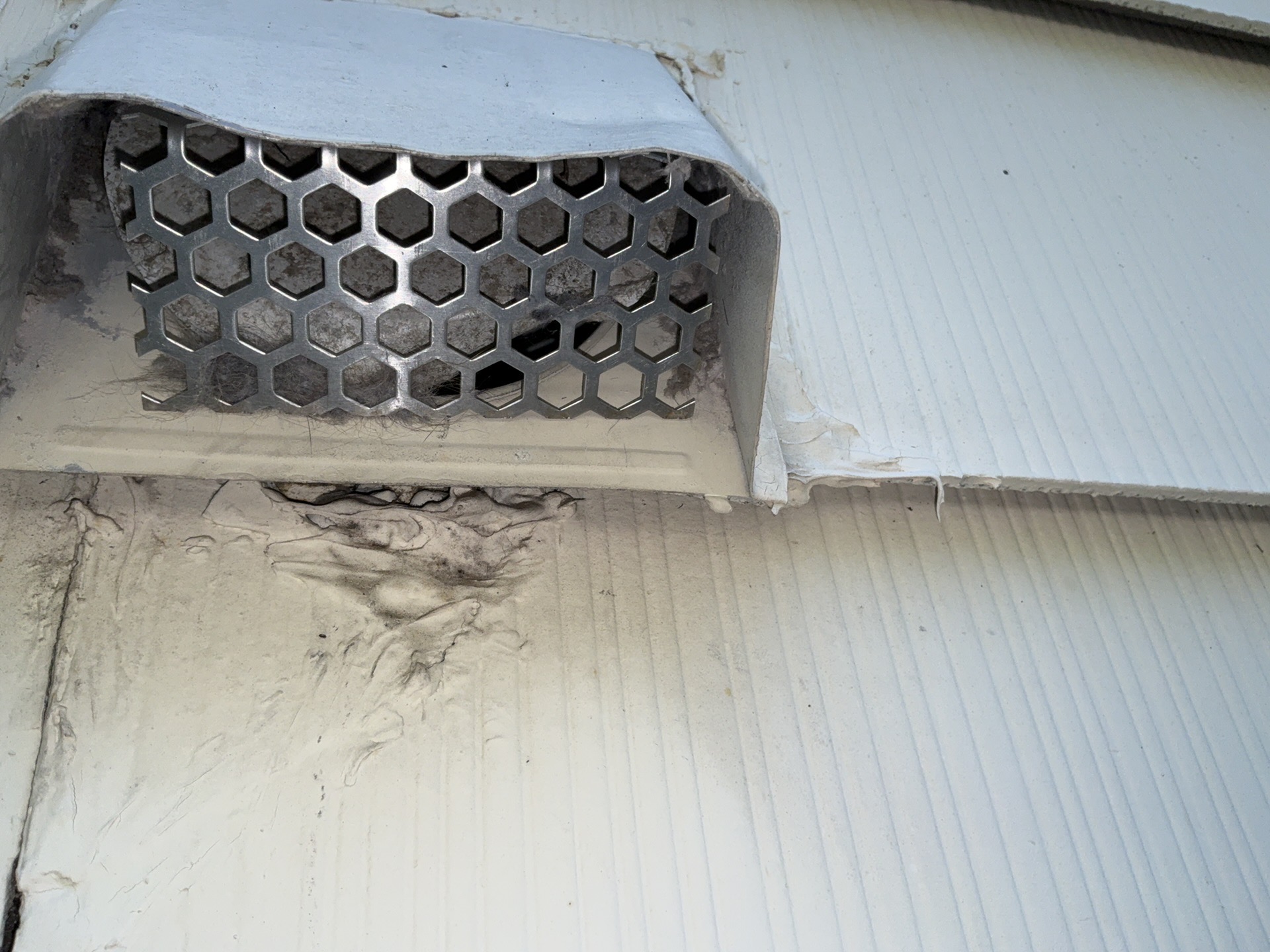
Visible lint at the end of the exhaust system is particularly useful because it can provide a clue about what may be occurring farther upstream. A termination that is heavily covered with lint or debris may indicate that the dryer exhaust system has not been adequately maintained.
As lint accumulates, the dryer has to work harder to move air through the system. Restricted airflow can contribute to longer drying cycles, higher operating temperatures, additional wear on the dryer, and potentially hazardous conditions.
The lint screen is only one part of the system. The ductwork between the appliance and the exterior termination also requires periodic evaluation and maintenance.
2. The Connection Behind the Dryer Matters
One of the first places we look is immediately behind the clothes dryer. This area can be difficult for homeowners to see once the appliance is pushed into position.
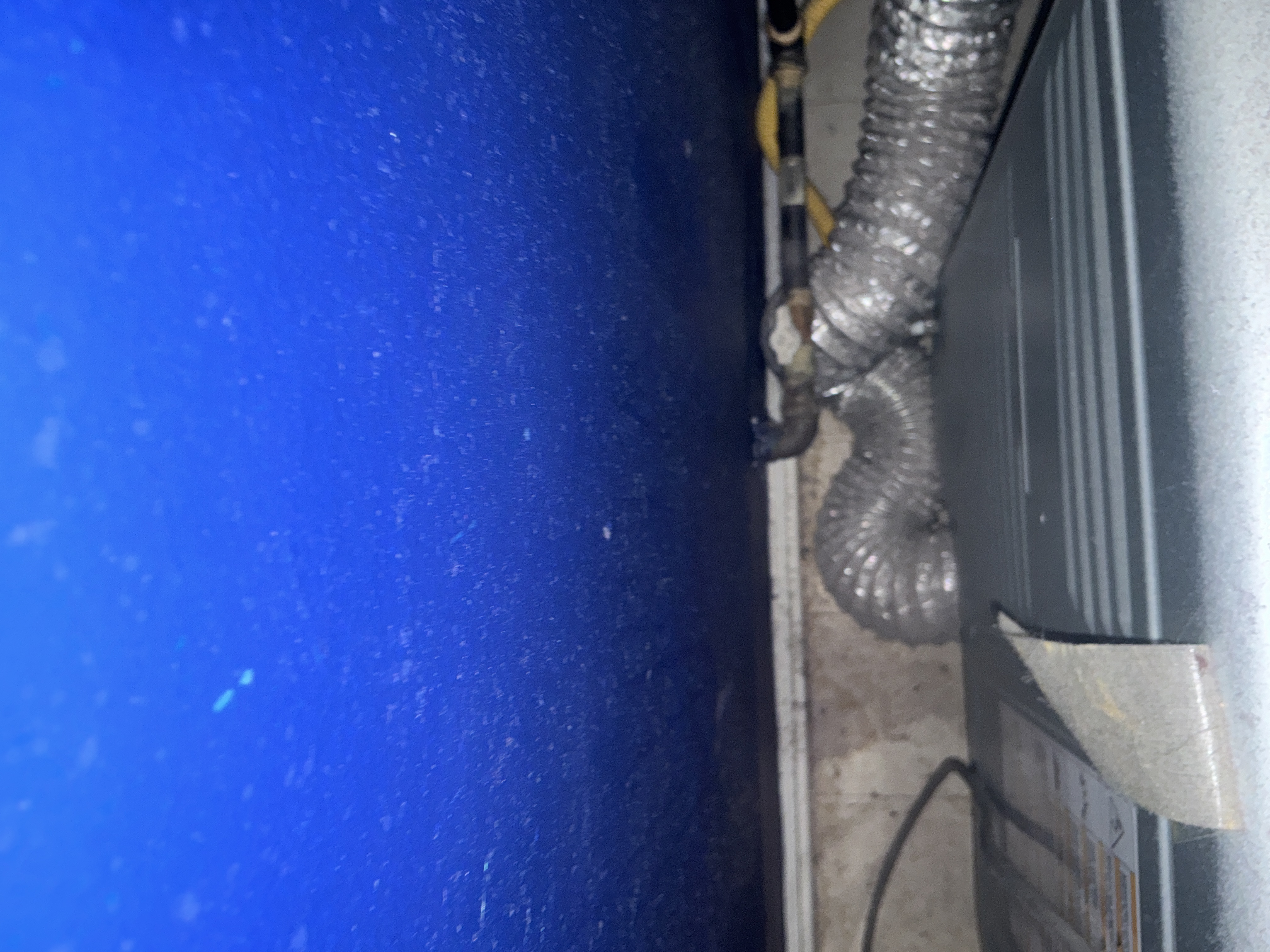
The transition duct connecting the dryer to the permanent exhaust system has to fit into a relatively small space. As the dryer is moved toward the wall, flexible material can become compressed, bent, kinked, damaged, or partially disconnected.
This is why simply looking at the dryer from the front cannot tell you much about the condition of the exhaust system.
Even when the dryer appears to operate normally, restricted airflow behind the machine may result in clothes taking longer to dry. In some situations, homeowners compensate by running additional drying cycles without realizing that the exhaust system may be contributing to the problem.
3. Dryer Vent Connections Can Be Hidden in Tight Laundry Areas
Many New Jersey homes were not originally designed around today's larger laundry appliances. Dryers may be installed in basements, closets, utility rooms, older laundry areas, or other spaces where clearance is limited.
That can create unusual exhaust configurations.

The connection shown above is a good example of why an inspection involves more than checking whether air is coming out of the exterior vent. The transition from the dryer into the building exhaust duct is an important part of the system.
Connections can loosen over time. Flexible ductwork can be damaged or crushed. Poor routing can add unnecessary resistance to airflow. In other cases, the duct may disappear into a wall almost immediately, making the remainder of the exhaust path difficult to observe.
When accessible, we evaluate the visible components and consider how the overall configuration may affect exhaust performance and future cleaning.
4. Long and Concealed Dryer Exhaust Runs Can Create Additional Challenges
In a simple installation, a dryer may sit against an exterior wall and discharge through a relatively short section of duct. Other homes have much more complicated systems.
The dryer may be located near the center of the building, on an upper floor, in a condominium, or in a laundry room that is far from an exterior wall. The exhaust duct may travel through concealed portions of the building before reaching the outside.
Longer runs and multiple changes in direction can make airflow more difficult and can create additional locations where lint may accumulate.
These configurations can also make cleaning more challenging. A homeowner may see only a few inches of duct behind the appliance while most of the system is concealed inside the building.
This is one reason we approach dryer exhaust systems from an inspection perspective instead of treating them as nothing more than a tube that occasionally needs cleaning.
5. The Exterior Dryer Vent Termination Is Part of the System
The exterior termination is where the exhaust finally leaves the building, and it deserves just as much attention as the duct behind the dryer.

During an inspection, visible conditions at the termination may include accumulated lint, damaged components, stuck dampers, debris, obstructions, or covers that interfere with the discharge of exhaust air.
The termination should allow the dryer to discharge air to the exterior while helping prevent unwanted entry when the dryer is not operating.
A damaged or restricted termination can reduce airflow through the entire exhaust system. That is why cleaning only the section behind the dryer may not solve an airflow problem if the restriction is located farther downstream.
6. Dryer Vent Problems Are Not Always Obvious
Some dryer exhaust problems provide clues. Others remain hidden until the system is inspected.
Conditions that may indicate the dryer exhaust needs attention include:
- Clothes taking noticeably longer to dry
- Multiple cycles being needed to dry a normal load
- The dryer or laundry area becoming unusually warm
- Visible lint around the exterior termination
- Weak airflow at the termination while the dryer is operating
- A damper that does not open freely
- A crushed or kinked transition duct behind the dryer
- Lint or debris accumulating around duct connections
- Moisture or condensation associated with the exhaust route
- Uncertainty about when the vent was last professionally cleaned
None of these conditions should be evaluated in isolation. Dryer performance can also be affected by the appliance itself, the size and type of laundry load, and other factors. However, they can be useful indicators that the exhaust system deserves further evaluation.
7. A Disconnected Dryer Vent Can Create Moisture Problems
Lint and fire safety receive much of the attention when dryer vents are discussed, but moisture is another important concern.
A clothes dryer removes a substantial amount of water from wet clothing. That moisture is supposed to travel through the exhaust system and discharge outdoors.
If an exhaust connection separates inside a wall, attic, crawlspace, basement, or other building area, warm moist air may be released inside the structure instead.
Depending on the location and duration of the condition, that moisture can contribute to condensation and deterioration of nearby materials. It may also deposit lint into areas where it is difficult to see or remove.
This is where building science becomes particularly relevant. A dryer exhaust system affects airflow, heat, moisture, and the building enclosure—not just the appliance sitting in the laundry room.
8. Gas Dryers Add Another Reason to Pay Attention to the Exhaust System
With an electric dryer, the exhaust system primarily carries heat, moisture, and lint. A gas dryer also produces combustion gases that are intended to be discharged outdoors through the dryer exhaust system.
That makes proper exhaust routing and termination especially important.
A disconnected, damaged, or improperly routed dryer exhaust should not be ignored simply because the dryer still turns on and produces heat.
9. Why Dryer Vent Inspection and Cleaning Should Work Together
Cleaning removes accumulated material from the exhaust system. Inspection helps determine whether there are other conditions that may be contributing to the problem.
For example, removing lint is beneficial, but cleaning alone may not correct a crushed transition duct, damaged exterior termination, disconnected section of ductwork, or unnecessarily restrictive configuration.
This is why Dynamic Inspections combines inspection with dryer vent cleaning rather than treating the service as simply pushing a brush through the duct.
The goal is to understand the condition of the accessible dryer exhaust system, identify concerns, improve airflow where possible, and provide useful information to the property owner.
10. How Often Should a Dryer Vent Be Cleaned?
There is no single maintenance interval that works perfectly for every household because dryer usage and exhaust configurations vary.
However, annual dryer exhaust evaluation and cleaning is a practical maintenance approach for many homes, especially where the dryer is used frequently or the exhaust run is long or concealed.
The National Fire Protection Association recommends cleaning lint from the vent pipe periodically and paying particular attention when clothes begin taking longer than normal to dry.
Homeowners should also remember that a newly purchased home may have an unknown dryer vent maintenance history. The previous owner may not know when the system was last cleaned, particularly if the exhaust route is concealed.
11. Dryer Vent Inspections During a Home Purchase
Dryer exhaust systems are also worth considering when purchasing a home.
A homebuyer may be inheriting years of lint accumulation, an older installation, a long concealed exhaust route, or a termination that has not been maintained.
When accessible, dryer exhaust conditions may provide useful information about maintenance needs and potential concerns before or shortly after taking ownership.
Dynamic Inspections can coordinate dryer vent services with a professional home inspection, allowing the buyer to evaluate more of the property's systems at the same time.
12. Condominiums, HOAs and Dryer Vent Requirements
Dryer vent maintenance can become particularly important in condominiums and other multi-unit properties. Exhaust systems may travel farther through the building, pass through concealed spaces, or terminate in locations that are difficult for individual owners to access.
Many condominium associations, HOAs, and property management companies establish periodic or annual dryer vent inspection, cleaning, and documentation requirements as part of their fire-safety and property-maintenance programs.
Requirements vary by community. Some associations simply require proof that the dryer exhaust was professionally cleaned, while others may have a specific form, inspection requirement, contractor qualification, or documentation process.
If your association requires documentation, provide those requirements when scheduling so we can determine what information is needed.
13. Why Professional Training Matters
CSIA Certified Dryer Exhaust Technician® (CDET®)
Dynamic Inspections provides dryer exhaust evaluations from the perspective of a CSIA Certified Dryer Exhaust Technician® (CDET®).
The certification focuses specifically on dryer exhaust systems, including inspection, maintenance, cleaning, installation considerations, airflow, and applicable industry standards.
Learn more about the credential through the Chimney Safety Institute of America.
Training matters because what appears to be a simple exhaust duct is actually a complete system consisting of the appliance connection, transition duct, permanent exhaust duct, fittings, routing, and exterior termination.
Understanding how those pieces work together helps identify conditions that may be missed when the focus is only on removing visible lint.
14. Dryer Vent Safety Is Part of Home Maintenance
Dryer exhaust maintenance is relatively easy to overlook because much of the system may be hidden from view. Unlike a leaking faucet or damaged roof shingle, lint accumulating inside a concealed duct does not always provide an obvious warning.
That is why routine inspection and cleaning should be considered part of normal property maintenance.
The National Fire Protection Association also identifies dryer vent maintenance and lint removal as important elements of clothes dryer safety.
Homeowners do not need to become dryer vent experts. They do need to recognize that cleaning the lint screen is only the first step and that the rest of the exhaust system deserves attention as well.
Dryer Vent Inspection & Cleaning in New Jersey
Dynamic Inspections provides professional dryer vent inspection and cleaning services for homeowners, homebuyers, landlords, condominium owners, HOAs, and property managers throughout New Jersey and portions of Eastern Pennsylvania.
We regularly serve communities throughout Mercer and Burlington Counties, including Princeton, Hamilton, West Windsor, Robbinsville, Lawrence Township, Hopewell, Pennington, Bordentown, Burlington, Mount Laurel, Moorestown, Medford, Mount Holly, Chesterfield, Columbus, and Florence.
You can also view our broader service area for additional locations.
Concerned About What's Hiding in Your Dryer Vent?
If your dryer is taking longer to dry clothes, you do not know when the exhaust system was last cleaned, or you simply want the system professionally evaluated, Dynamic Inspections can help.
Inspect. Inform. Educate.
Schedule Dryer Vent Service Call (609) 214-9586Learn more about our Dryer Vent Inspection & Cleaning services in New Jersey.